
10 Fruits that look Like Plums
Plums
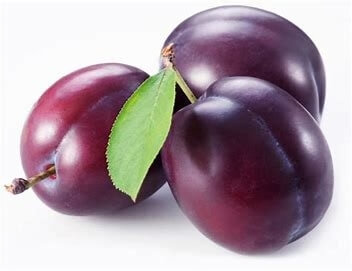
Compared to apples, plums don’t enjoy the same level of popularity. This is partly because many people aren’t as familiar with them, and they’re only available in local groceries for a short season with limited varieties. Even so, plums are wonderful fruits that deserve a spot in our diets. They offer a tangy-sweet flavor and velvety skin that make every juicy bite a treat. Nutritionally, they’re packed with natural sugars, fiber, and antioxidants that can do real wonders for the body.
Because of the unfamiliarity mentioned above, many people mistake plums for other fruits with deep purples, ruby reds, or dusky blues. To help you tell them apart, here are 10 fruits that look like plums—and shouldn’t be confused with them.
Note: As an Amazon Associate, I earn from qualifying purchases at no extra cost to you.
1. Cherries
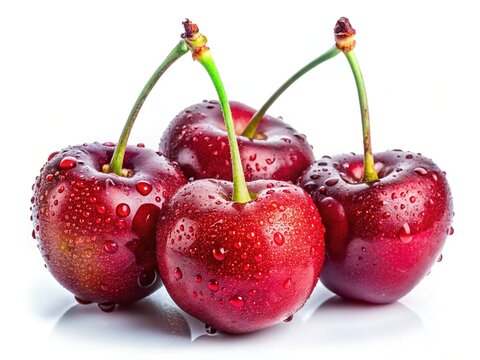
The first fruit that can easily be mistaken for plums is cherries. Dark varieties like Bing or Black cherries often resemble miniature plums. They share the same glossy skin, round shape, and deep red to purplish color. Although cherries are smaller, a bowl of ripe ones can, from a distance, look surprisingly similar—enough to make you think they might be tiny plums.
2. Damsons
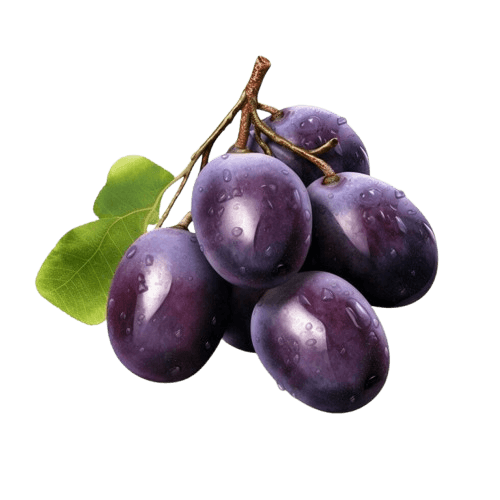
Damsons are actually a type of plum, but they’re smaller and more oval-shaped than common plums. They’re typically tart and slightly bitter when eaten raw, with a distinctive sweet-and-sour flavor profile. People often confuse them with regular plums because of their dusky purple-blue skin and plum-like pit, which make them almost indistinguishable from wild plums.
3. Jujube
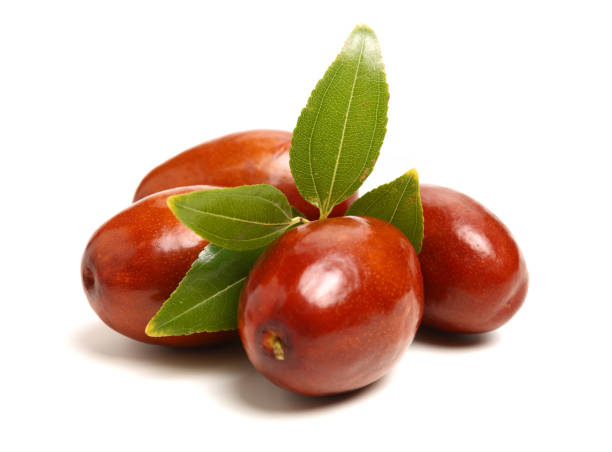
Ripe jujube fruits (also called Chinese dates) are small, round fruits that turn from green to reddish-brown or purplish-brown as they mature. At this stage, they develop smooth, glossy skin, which makes them easy to mistake for small plums. Some jujube varieties soften after ripening and wrinkle like dried prunes—so if you come across these, don’t be surprised.
4. Apricots
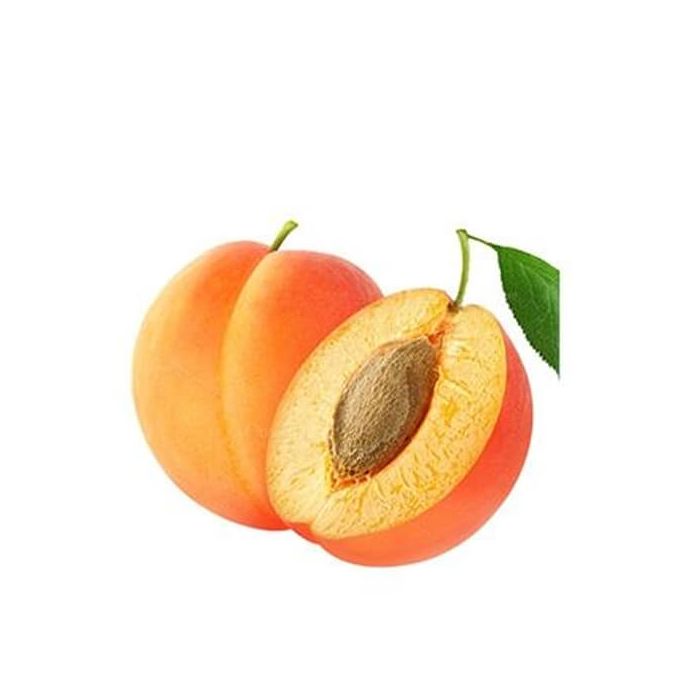
Many people often confuse plums and apricots because they are similar in shape and size. Both have smooth skin and a single central pit, which adds to the resemblance. Typically, apricots are golden-orange, but some red-blushed varieties can be hard to distinguish from certain yellow plums. So, how can you tell them apart? Apricots are generally smaller, with slightly fuzzy skin and a sweet-tart flavor, while plums are larger, have smooth skin, and a juicier texture. Their tastes range from sweet to very tart.
5. Peaches
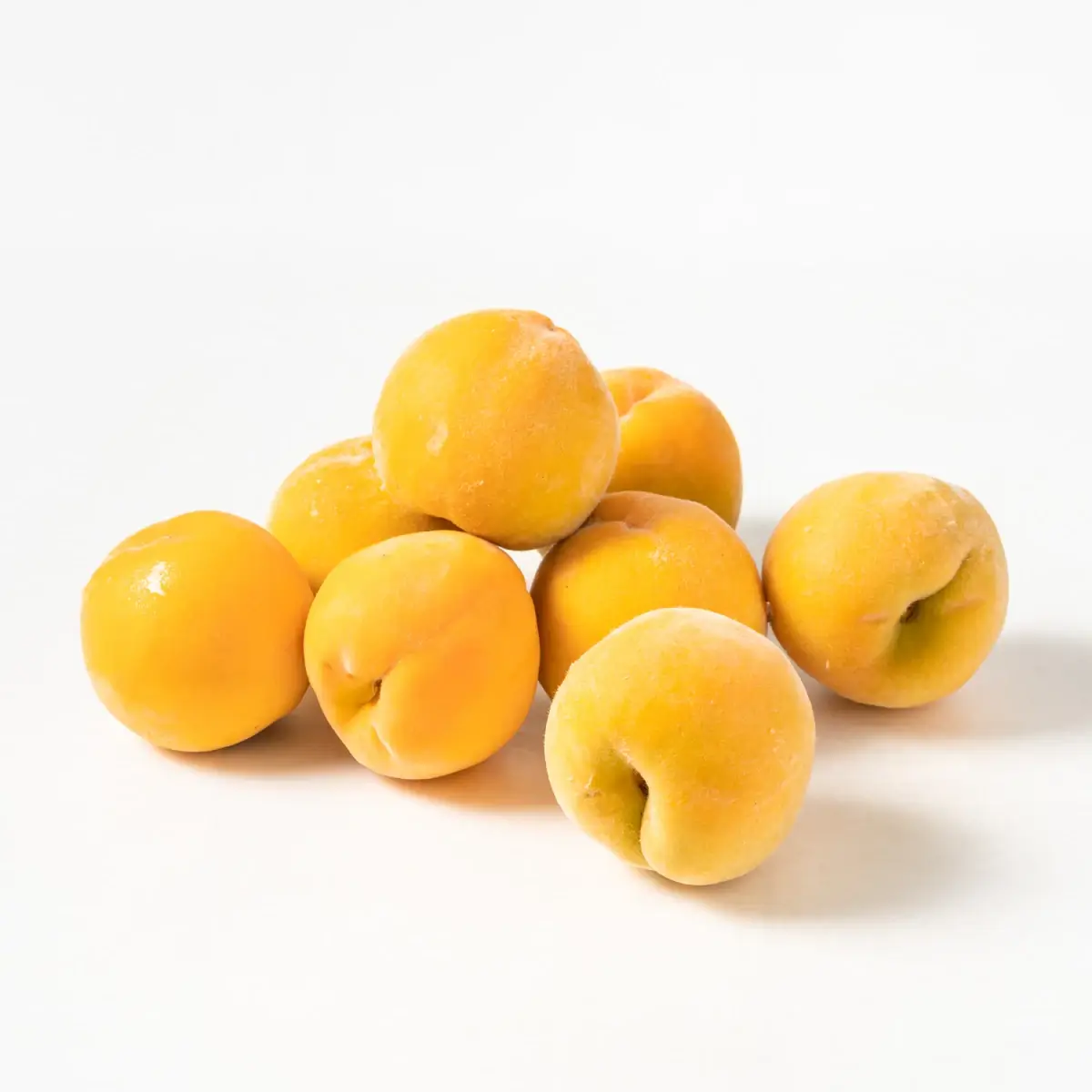
Another fruit often confused with plums and apricots is the peach. Unripe or small peaches, especially those with red or purple blush, can resemble large plums. The easiest way to tell them apart is by the skin: peaches have fuzzy skins, while plums are smooth and shiny. In terms of flavor, peaches are sweet and mild, whereas plums can range from sweet to tart. Still, in terms of size and roundness, peaches (particularly clingstone varieties) can easily be mistaken for plums at first glance.
6. Nectarines
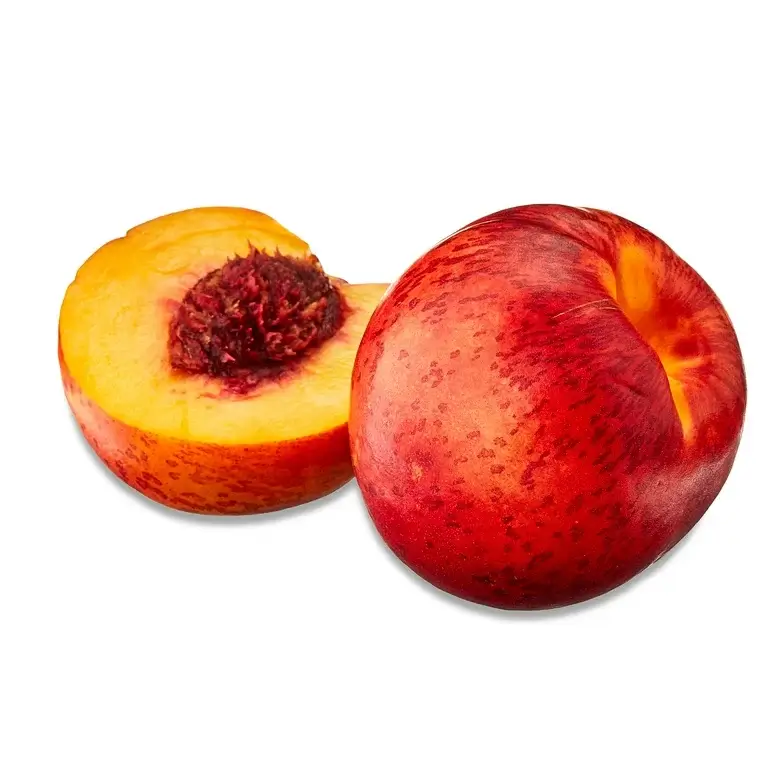
Apart from apricots and peaches, there’s another close relative of the plum that’s easy to confuse: nectarines. You may need to closely examine these two to differentiate them because, unlike peaches, they aren’t fuzzy and have smooth skin just like plums. Red or dark nectarines can even closely resemble plum varieties like Santa Rosa, especially when placed side by side in a fruit bowl.
So, how can you tell them apart? Well, plums are typically smaller and have an oval or round shape, while nectarines are generally larger—similar in size to peaches—and tend to be rounder, sometimes slightly heart-shaped, with a distinctive groove or suture running down one side.
7. Plumcot / Aprium / Pluot

There are also plum hybrids that can be challenging to distinguish from true plums. One of the most common is the Plumcot/Aprium/Pluot—a cross between plums and apricots. As you can see from the image above, they often look almost identical to plums. Depending on the variety, their skin may be red, purple, or speckled, with juicy flesh inside. Their high plum content makes it difficult to tell them apart without tasting.
8. Prunus mume (Japanese Apricot / Chinese Plum)
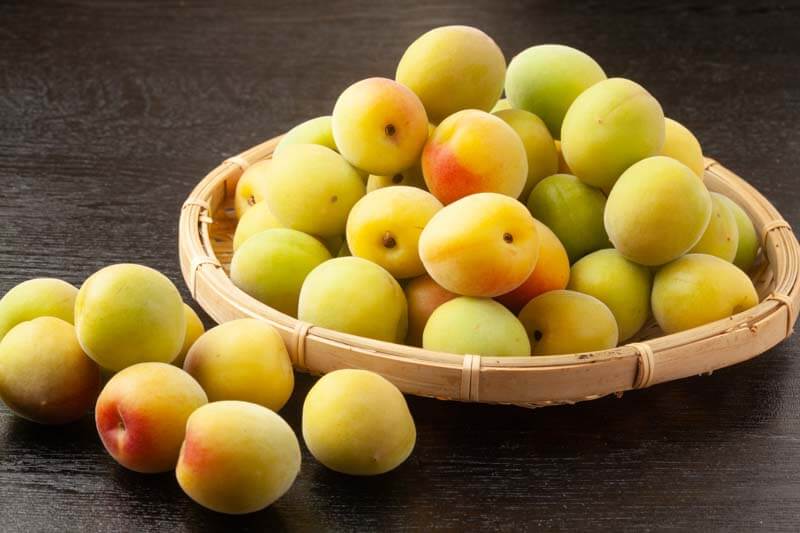
Despite being more closely related to apricots, this fruit is often called a plum and looks like one too. It’s small, round, and comes in yellow, green, or purplish hues. It is aromatic and sour, and is commonly used in East Asian cuisine and traditional medicine.
9. Black Grapes
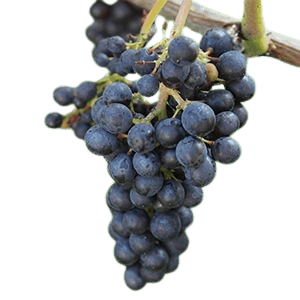
Though much smaller, certain black or Concord grape varieties have the dark skin and shape that can be easily confused with plums. When in clusters, it’s clear they’re grapes, but if you look at a single grape, its shiny skin and round shape might make you mistake it for a tiny plum.
10. Sloe Berries
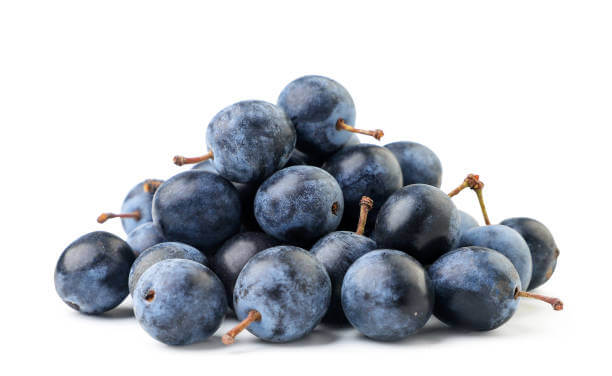
Sloes grow on blackthorn bushes and are close relatives of plums. They’re small, round, and bluish-black with a bloom (a natural waxy coating), much like wild damsons. Even though they taste very sour when raw, they look a lot like tiny plums.