
11 Fruits that look Like Blackberries
Blackberries
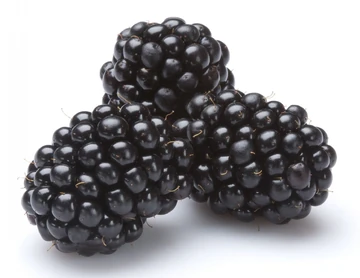
I can’t get enough of blueberries when they’re in season—and for good reasons. First, they’re a ready-to-go, delicious fruit with no peeling, hulling, or pitting required. They are also one of the few foods that are naturally blue. And if you’re a diet-conscious aficionado like me, you’ve probably heard of the “eat the rainbow” approach. Adding blueberries to your meals is one of the easiest ways to check off the “blue” in that rainbow.
But did you know that there are many fruits that resemble blueberries and can easily be mistaken for them—especially if you’re a forager like me? By the way, I head into the mountains every autumn to fill my basket with fresh, wild varieties. I especially love the wild ones because they tend to contain fewer toxins, and I believe they’re more nutritious. Their deeper color often means they’re richer in anthocyanins, the powerful compounds that give berries their vibrant hue.
There are several fruits with clustered drupelets, deep colors, and glossy skins that can easily pass for real blueberries at first glance. Today, I want to walk you through these look-alikes so that anyone second-guessing a mystery berry can feel confident about what they’re about to add to their fruit bowl.
Without further ado, here’s a quick overview of 11 fruits that could fool you into thinking they’re blueberries—especially at first glance.
1. Black Raspberries

Also known as blackcaps, they’re often confused with blackberries but are smaller, hollow inside, and have a slightly matte finish. The clustered drupelets and deep color make them nearly identical to blackberries until you bite into one. They have a sweeter, milder flavor with just a hint of tartness, unlike blackberries, which are known for their bold, tangy taste and naturally higher acidity.
2. Mulberries

Mulberries look quite similar to blackberries, even though they aren’t closely related botanically. Mulberries belong to the Morus genus, while blackberries are part of the Rubus genus in the Rosaceae family.
Mulberries are made up of many small drupelets clustered along a central stem or receptacle, giving them a more elongated, cylinder-like shape. Blackberries are also composed of multiple drupelets, but theirs are arranged in a rounder, more globular cluster.
Mulberries come in three main varieties—black, red, and white—while blackberries, regardless of variety, always produce deep purple to nearly black fruit.
Another key difference between the two is how they grow: mulberries grow on trees, whereas blackberries grow on canes that often form shrubs or dense bushes.
3. Boysenberries

In terms of appearance, boysenberries are among the closest lookalikes to blackberries. Their deep purple color and clustered drupelets can easily fool you into thinking they’re blackberries—but they’re actually quite different. Boysenberries are a hybrid created from several berries, including blackberries, raspberries, dewberries, and loganberries.
Physically, one of the main differences is size: boysenberries are generally larger than blackberries. They also ripen to a reddish-purple or dark purple hue, whereas blackberries are smaller and turn fully black when ripe.
The two also differ in taste and flavor. Because boysenberries are a blend of multiple berries, their flavor is more complex—often described as a mix of sweet and tart with subtle notes of both blackberry and raspberry. Blackberries, on the other hand, have a more straightforward flavor that is sweet with a gentle tartness.
4. Loganberries

Loganberries are hybrids between raspberries and blackberries, which makes them one of the closest blackberry lookalikes. The most important difference between the two is color: loganberries are dark red rather than black. They are also typically smaller or similar in size to many commercial blackberry varieties, though some blackberry cultivars can be smaller.
5. Dewberries

Dewberries and blackberries both have deep purplish-black hues, making them look strikingly similar at first glance. However, a few key differences make them easy to tell apart. To start, dewberries have fewer drupelets and seeds than blackberries. Blackberries also tend to be shinier, while dewberries often have a waxy coating that gives them a slightly duller appearance.
Another important difference lies in how they grow. Dewberries grow on low, trailing vines that run along the ground, whereas blackberries grow on upright canes that form bushes. This distinction is especially helpful if you’re foraging for these berries in the wild.
Discover other berries that grow on vines: 20 Berries That Grow On Vines
6. Thimbleberries (Unripe or Dark Varieties)

Most thimbleberries are red and flatter in shape, but some varieties—especially wild ones—can appear darker and somewhat resemble blackberries. However, thimbleberries have a hollow, cup-like structure, much like raspberries. Blackberries, on the other hand, are made up of tightly packed drupelets surrounding a solid core.
If you’re foraging, their growth habits can also help you tell them apart. Thimbleberries grow on broad-leaved shrubs with maple-like foliage, while blackberries grow on brambly canes lined with prickles.
7. Cloudberries (Overripe or in shadow)
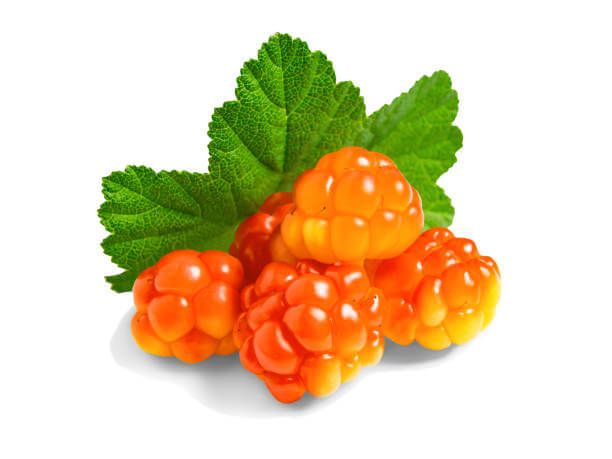
The only feature that might cause someone to confuse cloudberries with blackberries is their similarly clustered appearance. Unlike other blackberry lookalikes—which often share deep purple or black hues—cloudberries ripen to a golden-yellow or amber color, giving them a bright, jewel-like glow. Their drupelets are also larger, creating a more rounder surface, whereas blackberries consist of many small, tightly packed drupelets that form a firmer cluster. In general, blackberries also have more drupelets than cloudberries, making the two easy to distinguish once you know what to look for.
8. Youngberries

The youngberry is another blackberry hybrid that can easily be mistaken for a true blackberry. It’s a cross between raspberry, blackberry, and dewberry, which explains its close resemblance. Both youngberries and blackberries develop deep purple to nearly black fruits when ripe, but youngberries usually pass through a more reddish-purple stage before darkening, while blackberries typically turn a uniform deep black.
Their growth habits also differ. Youngberries grow on low, trailing vines similar to dewberries, whereas blackberries grow on upright, brambly canes.
9. Wild Bramble Berries
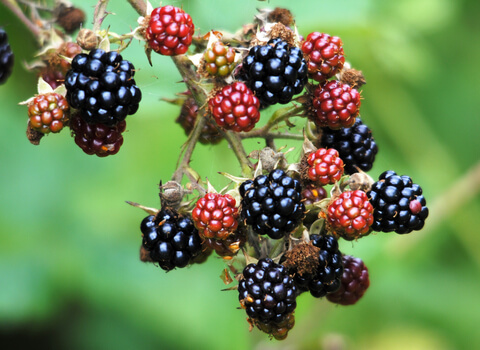
Wild bramble berries also resemble blackberries, especially because blackberries themselves are part of the bramble family. Brambles include raspberries, blackberries, and all their hybrids or derivatives, so it’s not surprising that many wild bramble berries can be mistaken for blackberries at a quick glance.
However, there are clear differences once you look closer. Many wild bramble berries—such as wild raspberries, dewberries, or hybrid brambles—tend to have a lighter color range when ripe, often turning red, reddish-purple, or deep purple, while true blackberries ripen to a solid, glossy black.
Of course their growth habits can also help you tell them apart. While blackberries grow on sturdy, upright brambly canes, some wild bramble berries may grow on low, trailing vines, arching canes, or thinner stems depending on the species.
10. Tayberries
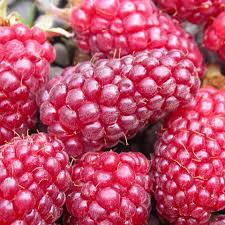
Tayberries are a hybrid of blackberries and raspberries, which can make them easy to mistake for blackberries. However, their color and shape set them apart. Tayberries are typically slightly more elongated and display a deep reddish-purple hue, often leaning more toward red than the solid black of ripe blackberries.
11. Salmonberries
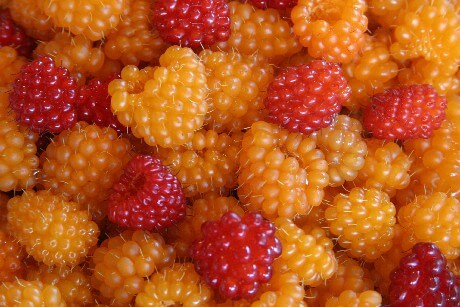
Finally, salmonberries can sometimes be mistaken for blackberries because both have rounded clusters of drupelets and a glossy surface. However, their colors make them easy to tell apart. Salmonberries are usually rounder and ripen to a bright orange or reddish-orange, whereas blackberries turn a deep, glossy black.