
List of Fruits that look Like Lychees
Lychees
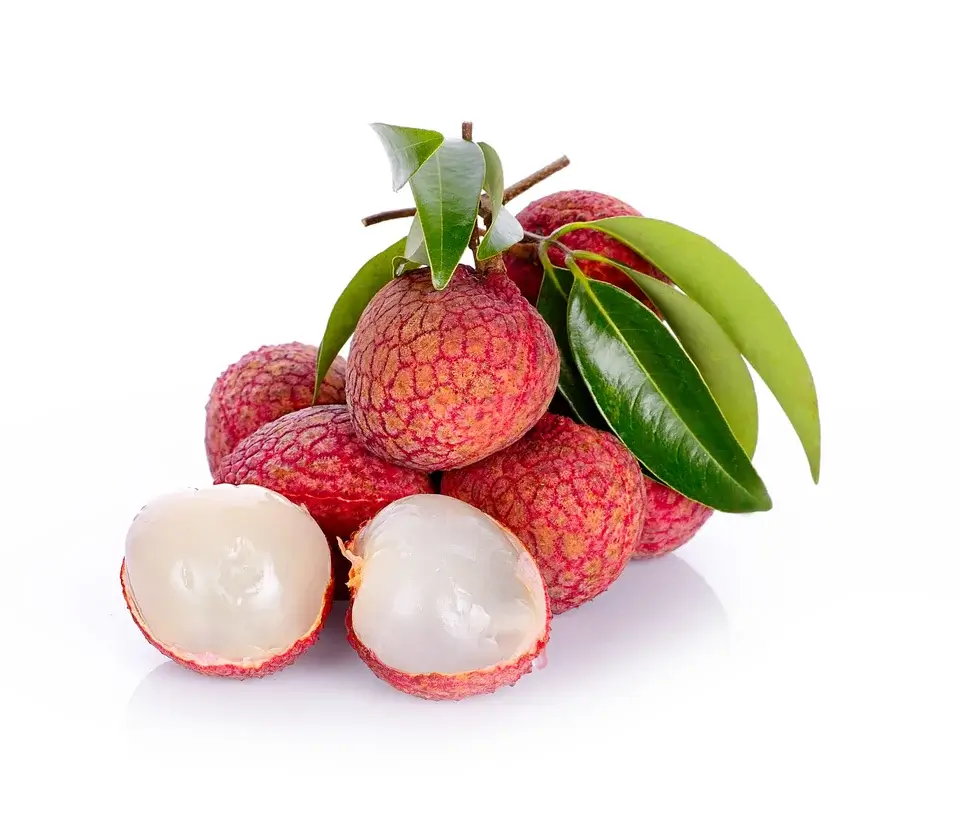
One of the exotic fruits I had been eager to taste for quite some time is the lychee. Its color, which ranges from soft pink to warm tawny, and its translucent, juicy flesh give it an almost mysterious allure. Add to that the fact that it is considered a symbol of love in China—where it is popularly known as the “fruit of love”—and you can understand why I was so eager to try this charming little fruit.
And yes, I tried the fruit and have since fallen in love with it! I can assure you that a bite of this fruit is a sensory experience unlike any other. The flesh is juicy, perfectly balanced between sweet and slightly tart, with a delicate aroma reminiscent of jelly.
If you want to taste lychee, however, you’ll need to understand that it’s not an everyday fruit you’ll find at your local grocery store. Availability depends on the season, which varies depending on where you are. Originally native to China, lychee is now also cultivated in subtropical regions of India, South Africa, and the U.S.
A small word of caution: make sure you choose real lychees and not their lookalikes. Several fruits can easily be mistaken for lychee, so to help you separate the wheat from the chaff, I’ll highlight a few fruits that resemble lychee in terms of appearance and structure.
1. Rambutan
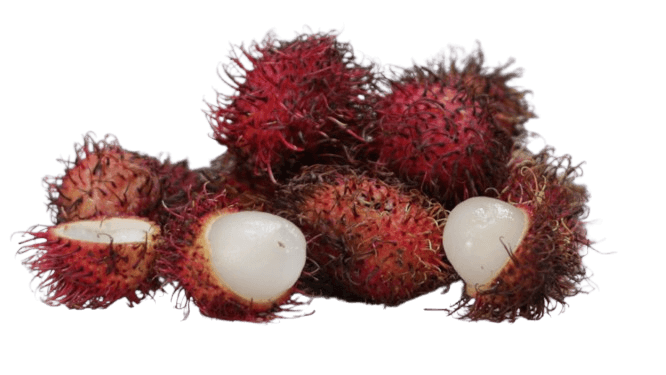
This tropical fruit looks like a wild version of the lychee. It has a similar round shape and juicy white flesh, but its skin is covered in soft, hair-like spines. When peeled, the translucent interior is nearly identical to that of a lychee. Rambutans are also larger than lychees.
2. Strawberry Tree Fruit
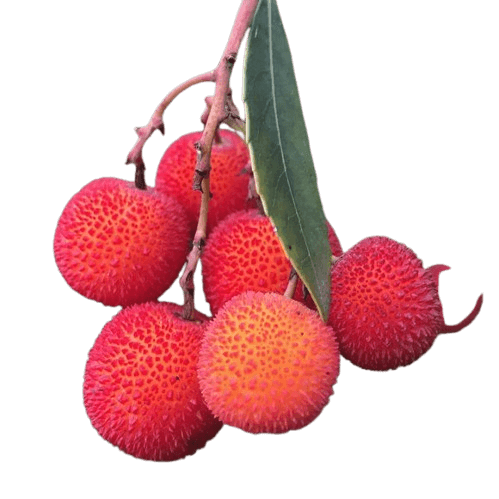
This small, round fruit has a red, bumpy surface that resembles a lychee’s rough skin, giving it a similar overall vibe. It’s easy to see why someone might confuse it with a lychee—but they are completely different fruits. Unlike lychees, which need to be peeled, you can eat strawberry tree fruit as it is just like a regular strawberry. In terms of taste, it’s sweet with a hint of sourness and has a slightly sandy texture due to its tiny seeds.
3. Pulasan
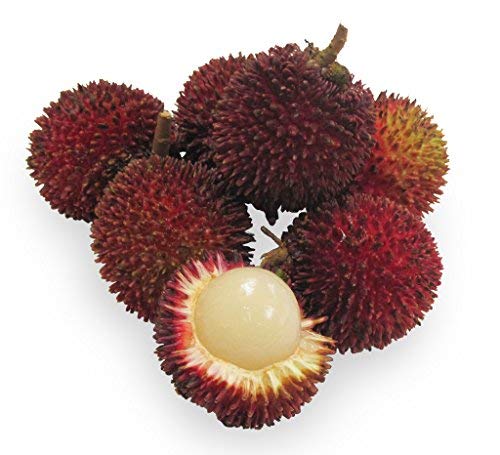
Closely related to the rambutan, pulasan has a thick, spiky red shell that resembles a lychee. Its interior also mirrors lychee, with juicy, translucent-white flesh that is almost indistinguishable. While it may look like a lychee, most people actually confuse it more with rambutans. Look closely, though, and the differences are clear: pulasan’s spines are blunter, whereas rambutan sports long, wispy hairs. Additionally, unlike rambutan’s skin, which tends to cling firmly to the seed, pulasan’s flesh separates easily.
4. Bayberry
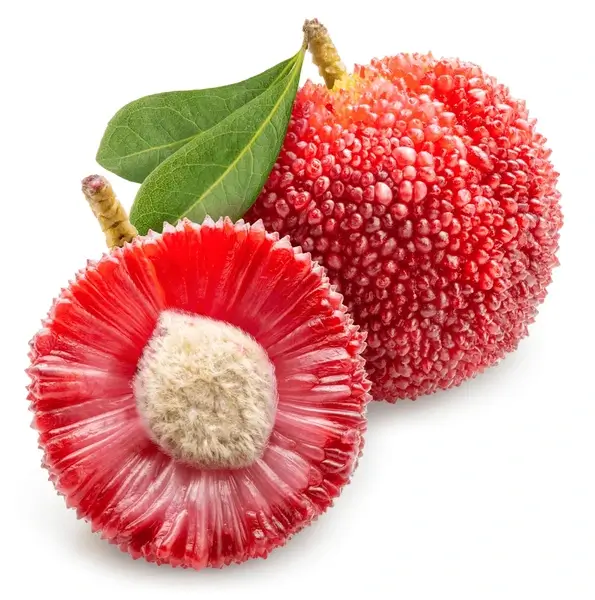
Bayberry (Yangmei) is another Chinese-native fruit that closely resembles lychee in terms of skin and texture. It is round, with a deep red to purplish color and a textured, bumpy surface much like a lychee. The main difference lies inside: lychee has smooth, translucent-white flesh, whereas bayberry’s flesh is slightly fibrous.
5. Gac Fruit
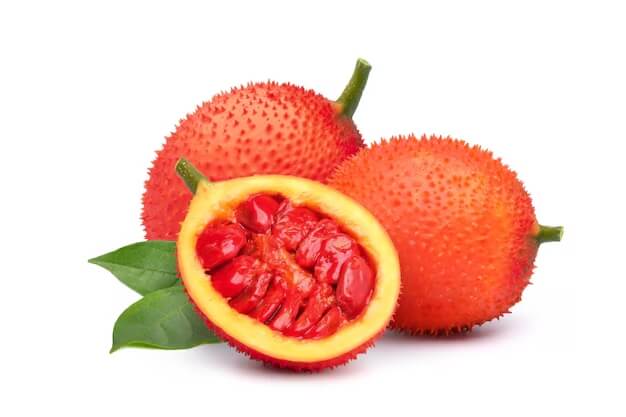
Another fruit that can be confused with lychee is the gac fruit. It has the same spiky, bright orange-red skin as lychee, but it is much bigger. Inside, it is also very different from lychee: while lychee has translucent flesh it features bright crimson-red, oily pulp (aril) surrounding a central chamber that holds several large, flat, brown seeds.
6. Korlan
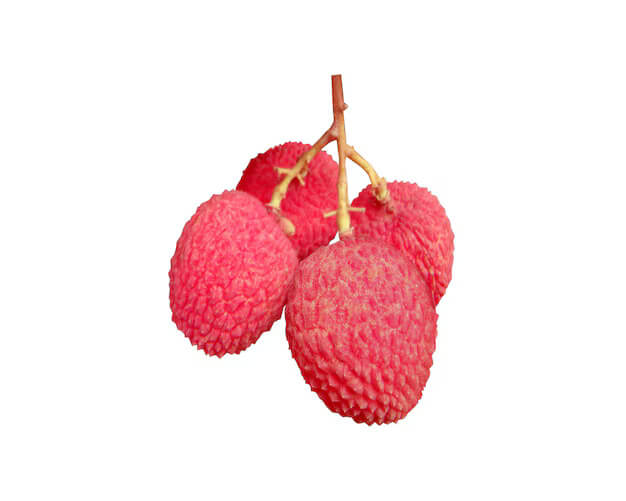
Among the lychee lookalikes I’ve mentioned so far, I think korlan is the closest. Telling them apart isn’t easy. It has the same physical characteristics as lychee: from the reddish, slightly bumpy skin to the soft, translucent-white flesh inside. The main differences are size and taste. Korlan is usually smaller and slightly more sour, with less fragrance than lychee.
7. Longan
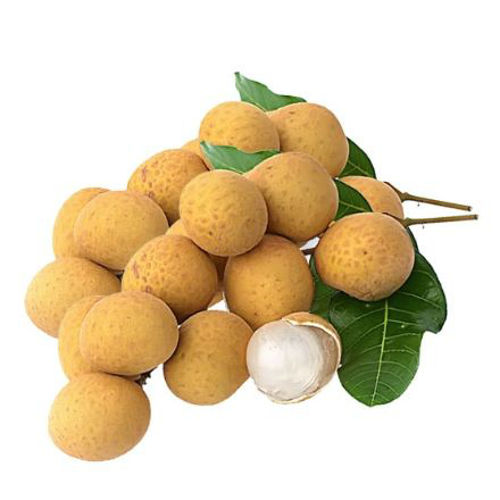
The final fruit that some people may confuse with lychee is longan. Unlike the other lychee lookalikes, you won’t mistake it because of its skin (it is tan, not red) but because of its inside. The translucent, juicy pulp looks like lychee flesh. So when it is cut open, and the tan skin is hidden, you might think it is lychee. However, lychee flesh is thicker, juicier, and more opaque. Longan flesh is firmer and more transculcent, so you can sometimes see the seed inside. It is also less aromatic than lychee.